

- 1. How Long Do Dog Food Allergies Take to Clear Up? (Clinical Timeline)
- 2. The Two Phases of a Dog Food Trial: Elimination vs. Provocation
- 3. The 30-Day Dog Allergy Reset Master Schedule (Day 1 to Day 30)
- 4. How to Score Your Dog’s Itching Like a Vet Dermatologist (PVAS 0–10)
- 5. How to Run the 7-Day Provocation Challenge Test Safely
- 6. Which Ingredients to Challenge First (And Exact Test Portions)
- 7. Emergency Rescue: How to Stop a Challenge Flare-Up in 24 Hours
- 8. 4 Environmental Confounders That Mimic a Failed Food Trial
- 9. Building Your Dog’s Permanent Safe-Food Rotation List
- 10. Frequently Asked Questions About Dog Food Trials & Challenges
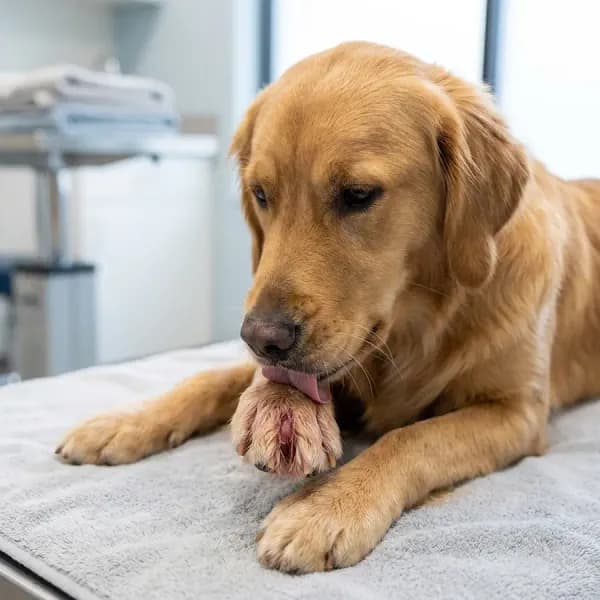
Starting an allergy diet without a structured calendar is like sailing without a compass. Every day, frustrated pet owners ask two critical questions: "How long do dog food allergies take to clear up?" and "Once my dog stops itching, how do I find out which specific ingredients they are actually allergic to?"
In veterinary dermatology, a complete dog food trial consists of two distinct halves: the 30-to-60 Day Immune Reset (Elimination Phase) and the 7-Day Provocation Challenge Phase. Here is your day-by-day clinical roadmap to execute both phases with 100% precision.
How Long Do Dog Food Allergies Take to Clear Up? (And How to Challenge)
In 80% of allergic dogs, digestive symptoms resolve within 7–14 days and skin itching drops by 50%+ within 21–30 days of starting a strict single-novel-protein diet (with full skin barrier resolution by Week 6–8). Once symptom-free, challenge 1 new ingredient every 7 days to build a permanent safe list.
Stop all kibble & treats; transition to novel protein + topical soaks.
Circulating IgE antibodies fall; nighttime paw chewing subsides.
Add 1 tbsp of a single test food for 7 days to confirm triggers.
1. How Long Do Dog Food Allergies Take to Clear Up? (The Cellular Timeline)
Why doesn't your dog stop scratching the very next day after you throw away their chicken kibble? Because canine food hypersensitivity involves both rapid Type I (IgE-mediated mast cell degranulation) and delayed Type IV (T-cell mediated) immune pathways:
- The Gut Lining (3 to 10 Days): Enterocytes (intestinal lining cells) regenerate every 72 to 96 hours. That is why diarrhea, mucus stools, and flatulence clear up within the first week.
- Dermal Mast Cells (21 to 30 Days): Histamines, cytokines (IL-31), and IgE antibodies bound to mast cells in the paws and ears have a biological half-life of 14 to 21 days.
- The Stratum Corneum Skin Barrier (28 to 56 Days): Rebuilding the ceramide lipid barrier and shedding thickened, yeast-colonized skin cells takes a full 4 to 8 weeks.
2. The Two Phases of a Dog Food Trial: Elimination vs. Provocation
Most pet parents stop after the elimination phase—meaning they feed expensive salmon or venison forever out of fear. By completing the Provocation Challenge Phase, you discover the exact 1 or 2 ingredients your dog reacts to so you can safely expand their diet again.
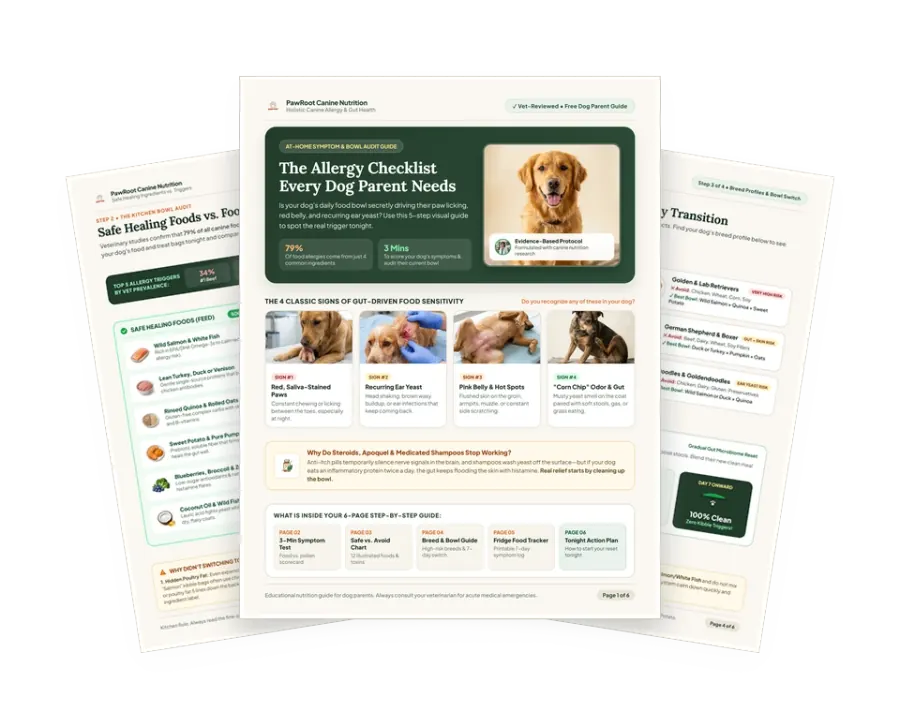
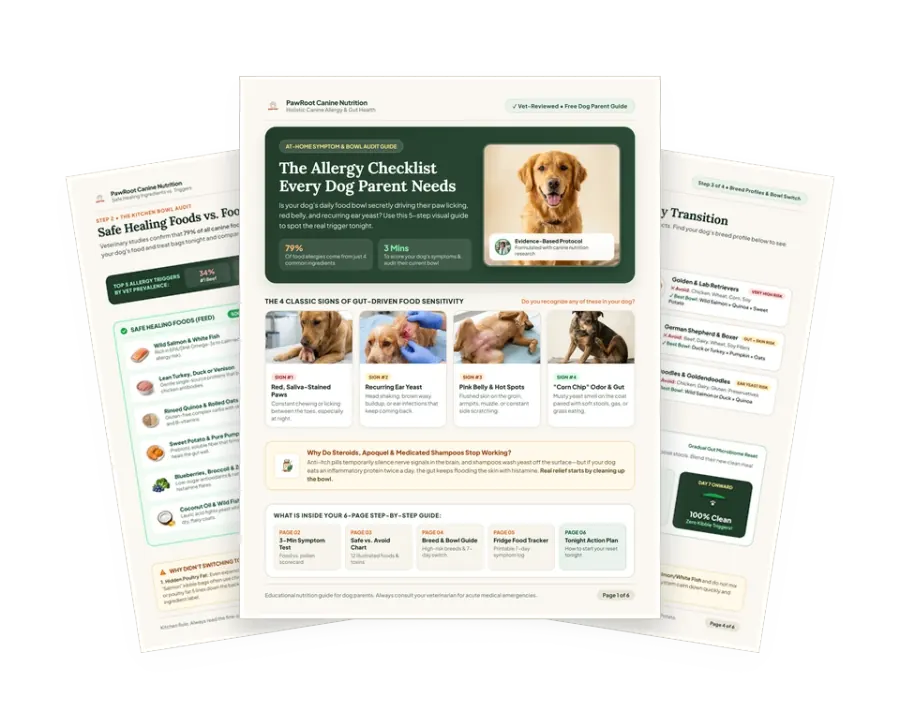
Print the Safe Healing Foods vs. Top 7 Kibble Triggers Chart
Don't guess which ingredients trigger histamine flare-ups. Keep this vet-reviewed 6-page clinical food chart, breed vulnerability table, and 7-day symptom log on your fridge:
🔒 100% Free Forever · Instant PDF Access on Next Screen + Sent to Your Inbox
3. The 30-Day Dog Allergy Reset Master Schedule (Day 1 to Day 30)
Follow this structured 4-week clinical reset calendar before beginning any ingredient challenges:
| Phase & Days | Dietary Protocol | Topical & Gut Support | Expected Clinical Milestones |
|---|---|---|---|
| Days 1–4: The Transition | Gradually swap 25% -> 100% to 1 Novel Protein (Wild Salmon or Venison) + Sweet Potato | Wash all food bowls in hot soapy water; start daily 50/50 ACV paw soaks | Stool firms up; possible brief 48-hr histamine detox itch |
| Days 5–14: The Gut Seal | 100% strict Novel Protein diet; zero commercial treats or flavored chews | Add 1 tsp virgin Coconut Oil + Quercetin w/ Bromelain (5 mg/lb) | Gas & scooting stop; ear wax production slows by 40% |
| Days 15–21: Mast Cell Calm | Continue strict single-protein meals; use 1-ingredient sweet potato chews for rewards | Reduce ACV paw soaks to 3x/week; bathe once with antifungal shampoo | Nighttime paw licking drops dramatically; red belly fades to pale pink |
| Days 22–30: Baseline Lock | Maintain 100% compliance; log daily PVAS itch score (target score: ≤2/10) | Continue Omega-3s & Coconut Oil to lock in ceramide skin barrier | 50% to 85% reduction in scratching; new fur sprouts on paws/ears |
4. How to Score Your Dog’s Itching Like a Vet Dermatologist (PVAS 0–10)
Human memory is unreliable over 30 days. Every evening at 8:00 PM, rate your dog's itching on the clinical Pruritus Visual Analog Scale (PVAS):
Occasional normal grooming scratch; never wakes up at night to lick paws.
Frequent paw licking after meals or before bed; stops when distracted during play.
Relentless chewing, wakes owner at night, interrupts walks/play to scratch raw skin.
5. How to Run the 7-Day Provocation Challenge Test Safely
Once your dog holds a steady PVAS score of 0 to 2 for at least 10 consecutive days, you can begin challenging suspect ingredients one by one:
- Step 1 (Keep 95% of the Bowl Identical): Do NOT switch to a bag of commercial kibble! Keep feeding your dog's safe baseline novel-protein recipe, and simply add 1 tablespoon (for small dogs) to 2 tablespoons (for large dogs) of a single, plain, cooked test ingredient on top.
- Step 2 (The 7-Day Observation Window): Feed that single test ingredient daily for 7 days while watching for any jump in PVAS itch score, ear redness, eye discharge, or soft stool.
- Step 3 (Verdict): If 7 days pass with zero symptoms, that ingredient is OFFICIALLY SAFE! If itching spikes on Day 2, 3, or 5, stop immediately—you have confirmed an allergen.
6. Which Ingredients Should You Challenge First? (Testing Order Chart)
Test low-risk whole foods first so you can expand your dog's menu quickly, saving the highest-risk allergens (chicken and beef) for last:
| Challenge Week | Ingredient to Test | Daily Test Portion | Historical Reaction Probability |
|---|---|---|---|
| Challenge Week 1 | Plain White Rice or Rolled Oats (Cooked) | 1 to 2 tbsp mixed in meal | Low (~4% of allergic dogs react) |
| Challenge Week 2 | Fresh Cooked Pork Tenderloin | 1 oz (small dog) / 2 oz (large dog) | Low-Moderate (~8% react) |
| Challenge Week 3 | Hard-Boiled Chicken Egg Yolk/White | 1/2 boiled egg daily | Moderate (~12–15% react) |
| Challenge Week 4 | Lean Ground Beef (Cooked in water) | 1 to 2 oz daily | High (34% of food-allergic dogs react) |
| Challenge Week 5 | Plain Poached Chicken Breast | 1 to 2 oz daily | High (15% of food-allergic dogs react) |
7. Emergency Rescue: How to Stop a Challenge Flare-Up in 24 Hours
What if you challenge chicken on Day 2 and your dog wakes up licking their paws furiously? Don't panic—that reaction is valuable diagnostic proof! Immediately halt the test food, give a therapeutic dose of Quercetin with Bromelain (10 mg/lb) to stabilize rupturing mast cells, and soak their paws for 5 minutes in a warm colloidal oatmeal bath or 50/50 ACV soak. Because the exposure was only 1–2 days, the flare typically subsides within 48 to 72 hours.
8. 4 Environmental Confounders That Mimic a Failed Food Trial
Roughly 30% of dogs with food allergies also have concurrent environmental atopy (pollen, grass, or dust mites). To prevent a false positive during your 30-day challenge:
- Wipe your dog's paws and belly with a damp cloth after every walk on freshly mowed grass.
- Wash their dog bed weekly in hot water (130°F+) with unscented, dye-free detergent.
- Ensure monthly flea prophylaxis uses an unflavored topical or non-beef/non-poultry oral tablet.
- Keep secondary skin yeast under control with topical antifungals during Weeks 1–3.
9. Building Your Dog’s Permanent Safe-Food Rotation List
Once you have identified 2 or 3 safe proteins (for example: wild salmon, venison, and pork) and 2 or 3 safe carbohydrates (sweet potato, pumpkin, and quinoa), rotate between them every 8 to 12 weeks. Rotating clean proteins prevents your dog's immune system from developing new hypersensitivities over time.
"Pet parents who use a daily symptom scorecard and pre-measured novel recipes are 4x more likely to finish their 30-day food trial successfully."
Don’t guess on portion sizes, calcium ratios, or challenge tracking. Our complete veterinary toolkit gives you the exact printable 21-to-30 Day Scorecard, safe food lists, and balanced recipes.
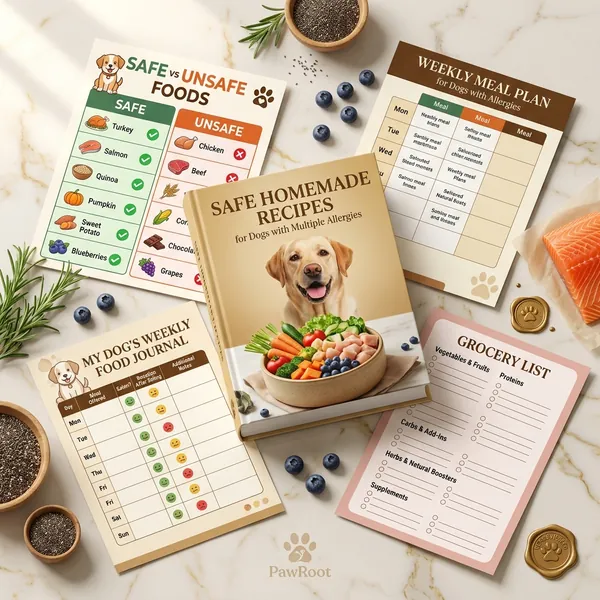
Ready to Cook Safe, Balanced Meals That Stop the Itching?
Get the complete PawRoot Safe Starter Kit (5-Book Digital System): 10 vet-reviewed hypoallergenic homemade recipes, the 4-week elimination diet meal plan, breed-specific genetic guide, and printable symptom tracker logs.
🔒 Instant Digital Access · 30-Day 100% "Happy Paw" Money-Back Guarantee
10. Frequently Asked Questions About the Dog Allergy Challenge Plan (FAQ)
Q: What if my dog is still 30% itchy after 30 days on the elimination diet?
If itching has improved by 50–70% (which proves food is a major driver) but 30% remains, two possibilities exist: either your dog needs the full 8-week (56-day) window for deep dermal histamines to clear, or they have a secondary Malassezia yeast infection or environmental pollen allergy that requires concurrent topical paw soaks and Quercetin support.
Q: Can my dog ever eat their trigger protein again in small amounts?
No. Immunological memory T-cells and B-cells retain sensitivity to a confirmed allergen for years. Even a fingernail-sized piece of chicken can re-trigger a 2-week pruritic flare in a chicken-allergic dog.
Q: Should I stop Apoquel during a dog food trial?
Veterinary dermatologists often allow keeping your dog on a short course of itch relief during Weeks 1 to 3 of the food trial for comfort, then tapering off completely at Week 4 so you can observewhether the new diet holds the skin calm on its own.
Q: Is a home-cooked diet better than prescription hydrolyzed kibble for a food trial?
Yes. Studies show that 20% to 40% of dogs allergic to native chicken or soy still react to prescription hydrolyzed diets, and hydrolyzed kibble remains high in refined cornstarch that feeds skin yeast. A fresh novel-protein home diet eliminates all rendering contaminants and synthetic starches.